A dress can be soft pink, deep black, ruby red, powder blue, or ivory and still work beautifully on a plus-size body. The question is not whether a color is “slimming.” The better question is whether the color placement supports the silhouette.
Start with face brightness
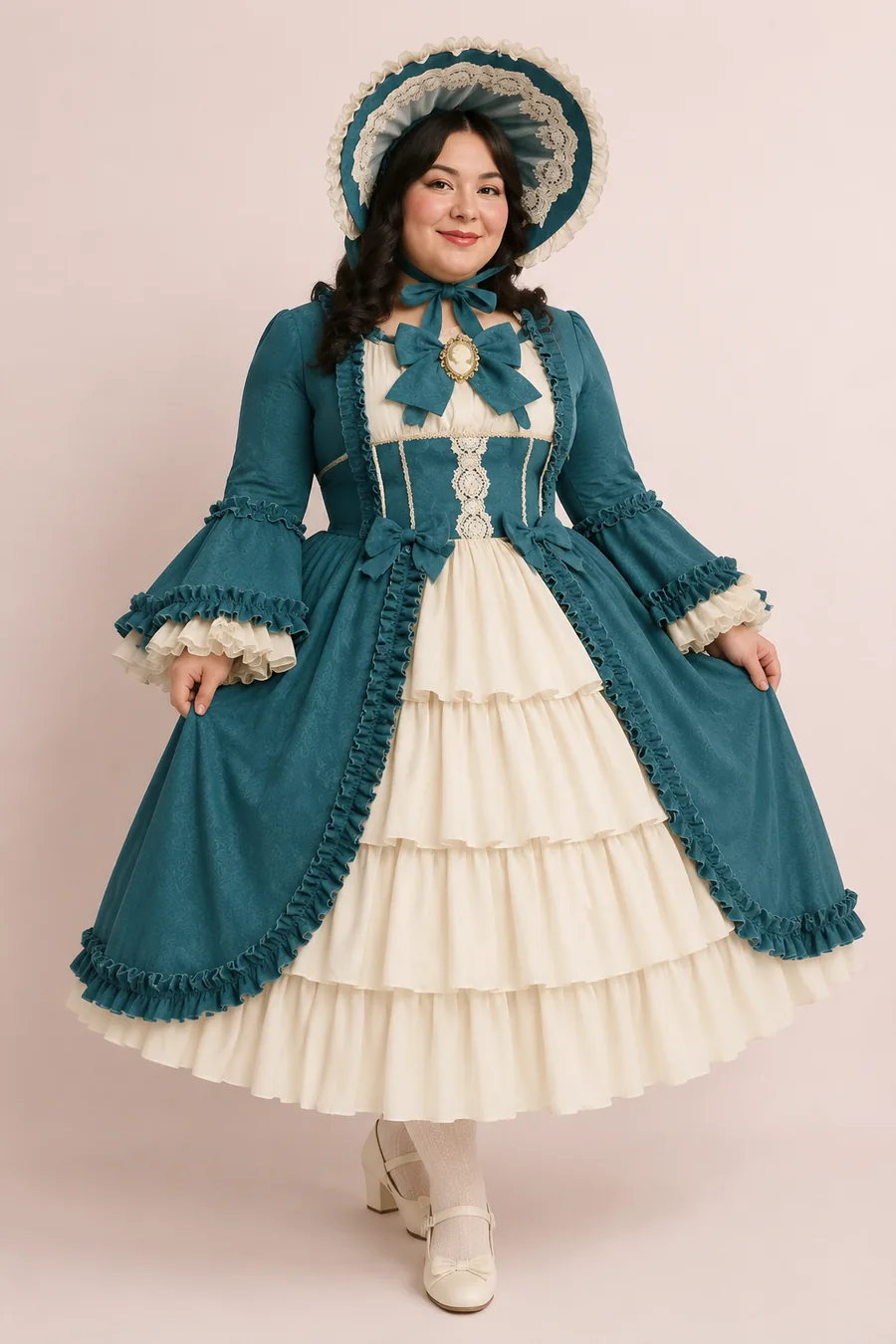
Pastels can look airy when they lift the face: light blue near the collar, ivory lace around the neckline, or blush pink balanced with white trim. If a pastel dress feels washed out, add contrast near the face through a bonnet, ribbon, blouse collar, or darker bow.
Use contrast to frame the bodice
Plus-size Lolita dresses often need a clear bodice frame. Vertical panels, center lace, waist bows, and darker outer panels can make the shape easier to read. A teal-and-ivory OP, for example, works because the ivory center brightens the dress while the teal sides define the structure.
Dark colors still need visible detail
Black Gothic Lolita can look dramatic, but black without texture may flatten lace, bodice lines, and skirt tiers in photos. Look for velvet depth, sheer lace yokes, pearl chains, ruby accents, ivory trim, or satin shine so the details stay visible.
Choose one main contrast story
A dress can have many trims, but the eye should understand one main contrast story: pink and ivory sweetness, black and ruby drama, blue and white freshness, or burgundy and cream classic warmth. When every trim competes, the silhouette gets busy.
Quick color checklist
- Does the neckline brighten the face or create enough contrast?
- Can you see the waistline and bodice structure clearly?
- Do the sleeves and skirt tiers remain visible in photos?
- Does the color match the event mood: tea party, portrait, daily wear, or gothic styling?
- If the dress is very pale or very dark, is there a trim that keeps the shape readable?
Color is not a rulebook. It is a tool. The strongest plus-size Lolita looks use color to protect the shape, not hide the body wearing it.