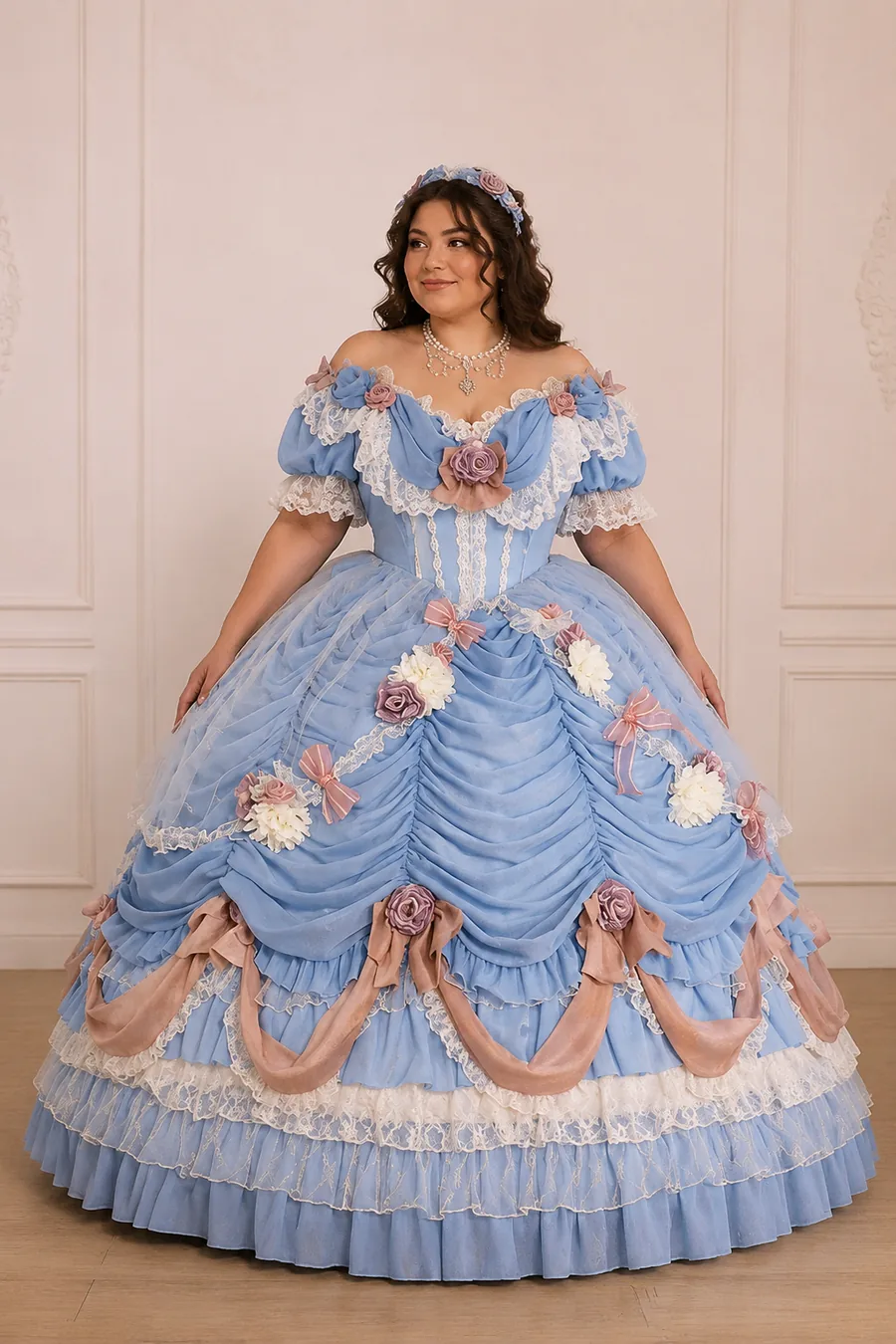
The right petticoat does not simply make a skirt bigger. It supports the dress shape the designer intended: cupcake, A-line, bell, or a softer tea-party curve. For plus-size Lolita, the goal is volume with control.
Match the petticoat to the skirt shape
A cupcake petticoat pushes volume outward near the waist and works well for sweet OP dresses and short tea-party silhouettes. An A-line petticoat spreads volume lower and can feel cleaner under classic or longer dresses. A formal Hime or Rococo gown may need a fuller support layer, but that does not mean the waist area should feel crowded.
Check length before fullness
A petticoat that is too short can create a shelf under the skirt. A petticoat that is too long may show below lace tiers or pull the hem into an awkward line. The best length usually sits slightly shorter than the outer skirt while still supporting the widest part of the silhouette.
Stiffness matters more than size
Very stiff petticoats can make sitting, walking, and stair movement uncomfortable. Very soft petticoats may collapse under heavy fabric. For plus-size wearers, medium support often works better than maximum stiffness because the outfit needs movement as well as shape.
Leave room for the body
If the dress already has a structured bodice, wide sleeves, and heavy trim, the petticoat should support the skirt without adding pressure at the waist. Comfort at the waist and hips matters because Lolita outfits are often worn for photos, tea parties, conventions, and long meetups.
Practical fitting test
- Stand front and side: does the skirt shape look intentional?
- Sit down: does the petticoat push the dress into the bodice?
- Walk a few steps: does the hem keep its line?
- Take a phone photo: can you still see the dress details clearly?
Good petticoat volume should make the dress easier to read. It should not fight the bodice, hide the trims, or make the outfit harder to enjoy.