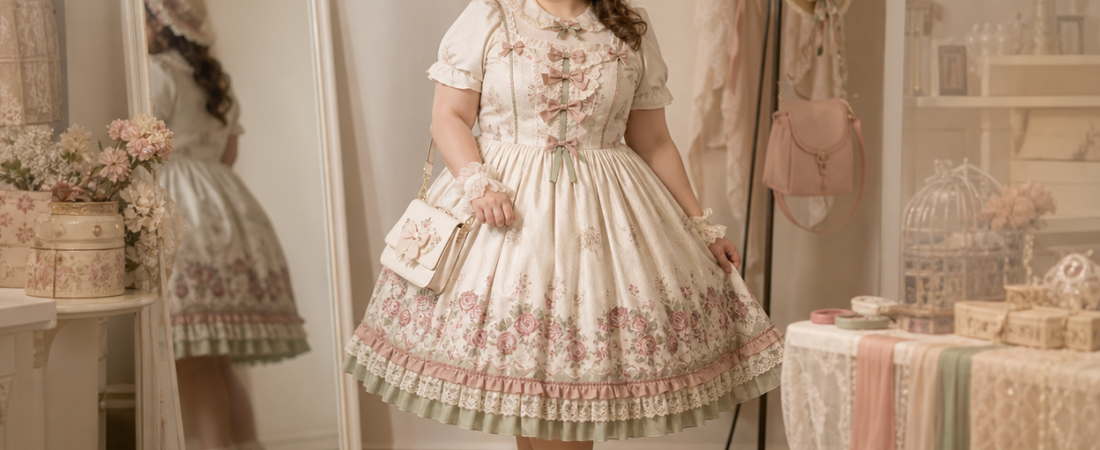
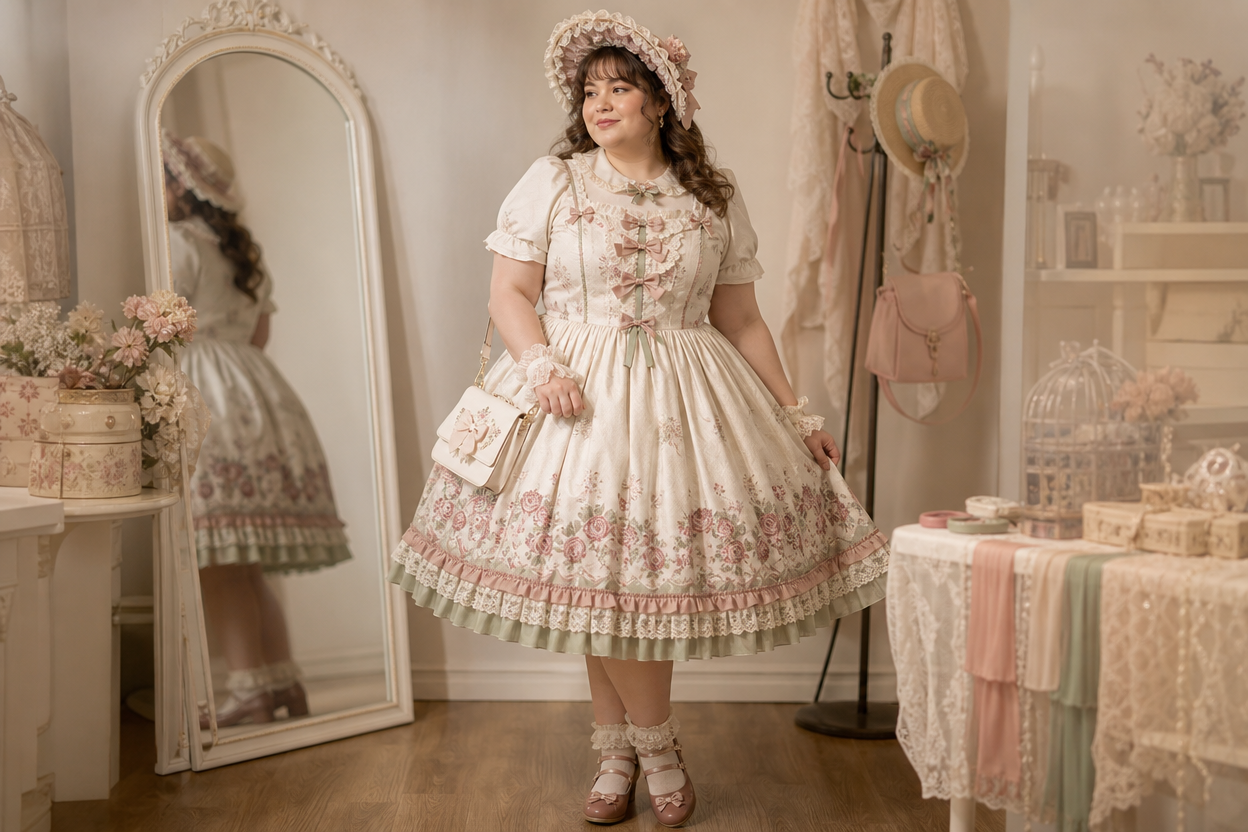
Quick answer: choose plus-size Lolita accessories by matching their scale to the dress silhouette, neckline, skirt volume, and your real movement needs. Headwear frames the face, collars finish the neckline, bags add a practical focal point, and shoes anchor the outfit. The best accessories make the complete look feel intentional without creating pressure, instability, or visual clutter.
Accessories are often treated as the final step, but they change how an outfit reads from head to toe. A large bonnet can balance a wide skirt, a delicate collar can clarify a structured neckline, and a properly sized bag can add polish without interrupting the waistline. Proportion is not about hiding the body; it is about giving every part of the outfit a clear role.
Compare four essential accessory groups
| Accessory | Visual role | Proportion checks | Comfort and movement checks |
|---|---|---|---|
| Headwear | Frames the face and carries the outfit theme upward. | Compare brim, bow, or crown width with the neckline and skirt volume; keep the face and eyes visible. | Check head circumference, weight, pin or tie security, hair volume, and whether it stays comfortable after several hours. |
| Collars and neckwear | Defines the upper chest and connects the blouse to the dress. | Match the collar height and lace scale to the neckline; avoid several competing focal points at once. | Check neck ease, clasp placement, skin sensitivity, and whether the collar shifts when you turn or reach. |
| Handbags | Adds a practical focal point near the waist, hip, or hand. | Choose a size that reads clearly beside a full skirt without becoming a second large silhouette. | Test strap length, weight, handle comfort, phone access, and whether it presses into the bodice or petticoat. |
| Shoes | Anchors the hem and controls the finished line of the outfit. | Coordinate toe shape, strap detail, and color with the dress rather than relying on heel height alone. | Check toe room, arch support, ankle stability, heel security, and the total walking time of the event. |
Build a balanced accessory scale
- Choose the dress focal point. Decide whether the neckline, print, bow, or skirt trim is the main statement before adding accessories.
- Repeat one design language. Echo a color, lace edge, pearl, ribbon, or metal finish in two or three places so the outfit feels connected.
- Vary the visual weight. If the skirt is very full, a structured bonnet or clear shoe shape can keep the look grounded. If the dress is detailed at the bodice, use calmer accessories nearby.
- Leave room to move. A beautiful accessory that pinches the neck, slips from the head, or catches on the skirt will not feel good in a real wardrobe.
Measure the accessories that touch the body
| Measurement or detail | Why it matters | Practical check |
|---|---|---|
| Head circumference | Prevents bonnets, headbands, and hats from creating pressure or sliding during movement. | Measure where the headwear will sit, including the hairstyle or wig volume you normally use. |
| Neck comfort | Collars and chokers can feel tighter after a meal, during warm weather, or when you turn your head. | Leave enough ease to breathe, look over your shoulder, and wear the planned blouse layer. |
| Bag carry point | A strap can pull on the sleeve, press against the bust, or sit awkwardly over a full petticoat. | Test shoulder, crossbody, and hand carry with the actual dress and outer layer. |
| Foot length and width | Toe room and width matter more than a visually delicate shoe when you will stand or walk for hours. | Try the shoe with Lolita socks, tights, and the heel height you plan to wear at the event. |
Style by Lolita mood
For Sweet Lolita, a bonnet, lace collar, compact handbag, and rounded Mary Janes can create a gentle rhythm. Classic Lolita benefits from structured headwear, restrained neckwear, a clean handbag shape, and a stable shoe. Gothic outfits can use sharper contrast and heavier hardware, while Hime styling can carry more ornament near the face as long as the lower half remains visually supported.
Use the same test for every style: stand, turn, sit, walk, and check the outfit from a few steps away. The accessory should remain secure and the dress should still be the center of the look. Balance comes from relationships between pieces, not from a rule that every accessory must be small.
When to request an accessory styling fit check
Use Fit Before You Buy when a dress needs a specific bonnet, collar, bag strap, shoe height, or petticoat balance. Include the dress link, your height, head circumference, shoe size, carry preference, event duration, and any movement concerns.
Start with the Size Center for body measurement guidance, then visit the Shop and compare each product silhouette, neckline, trim scale, and styling direction before building the complete outfit.
Plus-size Lolita accessories FAQ
How should I choose Lolita headwear for a plus-size outfit?
Start with the scale of the dress, neckline, and shoulder line rather than trying to make the body look smaller. A bonnet, beret, or bow should feel intentional, stay secure, and leave the face visible from the front and side.
What size Lolita bag is practical with a full skirt?
Choose a bag that holds what you need without competing with the skirt width. Check strap length, handle placement, and whether the bag rests comfortably above the petticoat instead of pressing into the waist or pulling the bodice.
Are platform Mary Jane shoes comfortable for plus-size Lolita styling?
They can be, but comfort depends on the sole, heel stability, ankle support, toe room, and total walking time. A lower stable heel or a supportive flat can be a better choice for conventions and long events.
What should I include in an accessory styling fit check?
Share the dress link, your height, shoe size, head circumference if headwear is included, preferred bag carry method, event duration, and any movement needs such as walking, sitting, or carrying a phone and wallet.