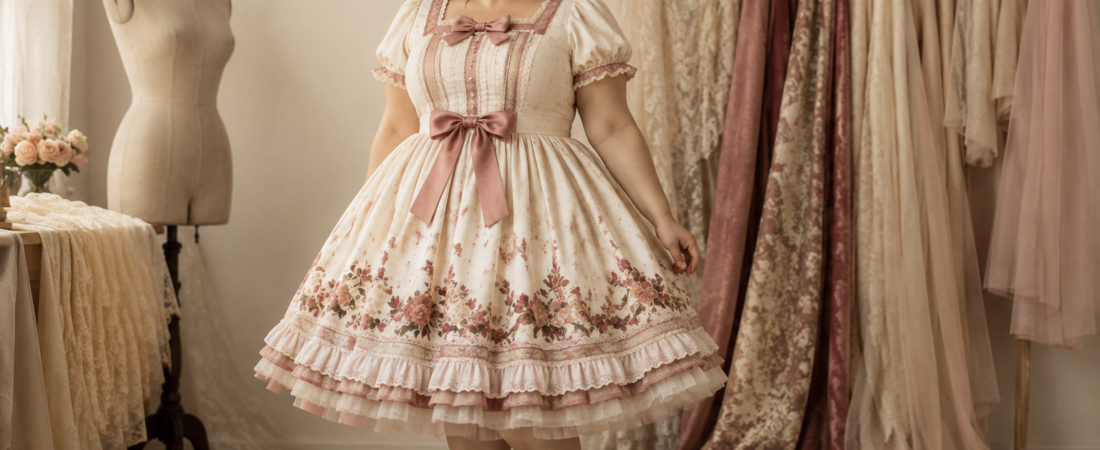
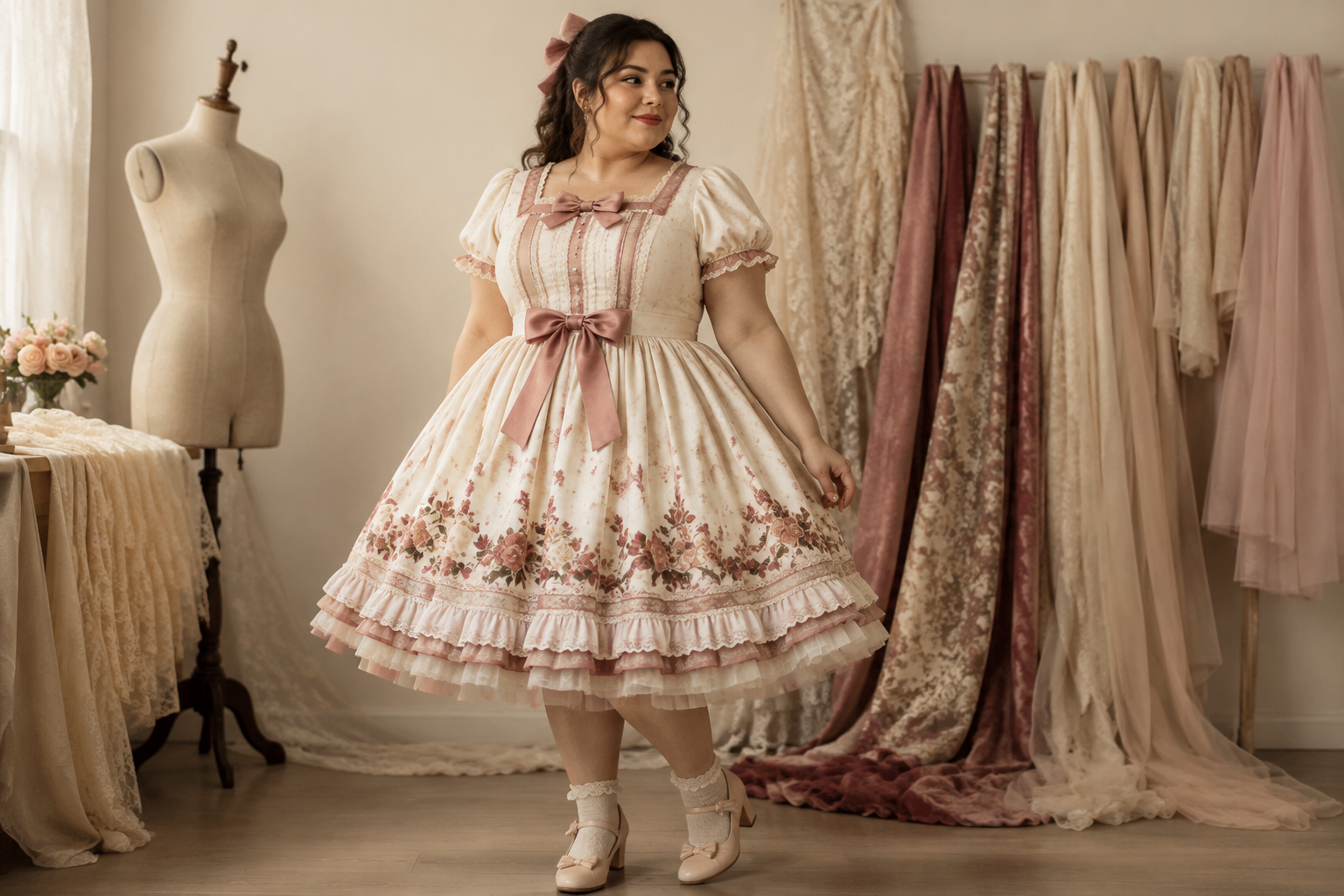
Quick answer: choose the fabric of a plus-size Lolita dress by balancing hand feel, breathability, structure, layering, and the movement you need. Cotton is usually the most adaptable, velvet offers a rich structured look but holds warmth, tulle adds airy volume but needs a stable base, and brocade creates polish with more weight. The best fabric is the one that supports the design without making the bodice, sleeves, or petticoat uncomfortable.
Fabric weight changes how a dress hangs, how much ease you feel at the bust and upper arm, and how much petticoat volume the skirt needs. It also changes the practical experience of sitting, carrying a bag, attending a convention, or wearing the dress for several hours. A beautiful textile should still work with the full outfit and your real routine.
Compare four common Lolita fabrics
| Fabric family | Look and drape | Plus-size fit priorities | Season and layering notes |
|---|---|---|---|
| Cotton or cotton blend | Matte, breathable, and adaptable; can hold a soft gathered skirt without feeling overly rigid. | Check lining, bust ease, sleeve comfort, and whether the print or seam placement stays smooth over the fullest areas. | A reliable choice for warm or mixed seasons. Pair with a lighter blouse and moderate petticoat when comfort matters. |
| Velvet or velveteen | Dense, soft, and visually rich with a heavier fall and deep color saturation. | Review shoulder, armhole, closure, and waist ease carefully because the fabric can feel warm and less forgiving when layered. | Well suited to cool-weather Gothic or Classic looks. Use controlled skirt volume so weight does not become pressure. |
| Tulle or organza overlay | Light and airy as a surface layer, with translucent texture and volume when supported by lining or underlayers. | Do not treat the overlay as bodice support. Check the base fabric, seam strength, lining coverage, and how lace edges sit over the bust. | Useful for romantic Sweet or Hime silhouettes. Keep the base layer smooth and choose a petticoat that supports without snagging. |
| Brocade or jacquard | Structured, decorative, and polished, often with a more tailored body and visible woven pattern. | Check bust ease, back comfort, zipper or button placement, and the extra room needed for sitting and bending. | Strong for formal Classic or Rococo styling. Reduce unnecessary layers if the dress already carries visual and physical weight. |
Weight is not the same as support
A heavy textile may hold a crisp skirt, but it cannot correct a bodice that is too tight, a sleeve that lacks upper-arm ease, or a closure that sits over the fullest part of the bust. Likewise, a light tulle overlay can look elaborate while the lining underneath provides the actual structure. Judge the fabric together with seams, lining, closures, trim, and the intended petticoat.
- Bust: allow room for the fabric and the blouse or camisole underneath without relying on compression.
- Upper arm: account for sleeve lining, lace cuffs, elastic, and the way a puff sleeve moves when you reach forward.
- Waist: check whether the textile and trim add pressure when you sit, especially in a firm brocade or velvet bodice.
- Skirt: match petticoat volume to the textile so the hem is supported without a heavy load pulling at the waist.
Measure for the finished outfit
| Check | Why it matters | What to include |
|---|---|---|
| Full bust and underlayer | Shows how much room the bodice needs once a blouse, bra, or camisole is included. | Measure the fullest bust naturally and name the layer you plan to wear most often. |
| Shoulder and upper arm | Heavier fabric and dense lace can make a tight armhole feel restrictive quickly. | Include shoulder width, upper-arm circumference, and whether you need to reach or carry items. |
| Waist and sitting comfort | Weight and firm closures can feel different when the torso bends or sits. | Record your natural waist and describe a normal chair, event, or travel movement. |
| Height and petticoat plan | Fabric weight changes the skirt drop and the amount of volume needed at the hem. | Include height, shoe height, petticoat length, and preferred silhouette fullness. |
Choose fabric by occasion
For a summer tea party, cotton with a lighter petticoat may be easier to wear for hours. For an evening event, velvet or brocade can create a richer silhouette, but the blouse, lining, and venue temperature should be part of the decision. For photos, a tulle overlay can add texture without making the whole garment heavy when the base is well fitted.
Test the complete outfit rather than judging one textile in isolation. Walk, sit, reach forward, turn, and lift your arms. If the dress feels heavy at the shoulders or the skirt pulls at the waist, changing the fabric alone may not solve the issue; the construction and fit path need review together.
When to request a fabric and comfort fit check
Use Fit Before You Buy when a product uses velvet, firm brocade, layered tulle, heavy lace, a structured bodice, or a full petticoat-specific skirt. Include your bust, waist, shoulder, upper-arm, height, preferred season, and the layers you expect to wear.
Start with the Size Center for the measurement checklist, then visit the Shop and compare the product fabric, silhouette, closure, sleeve construction, and available fit path before ordering.
Plus-size Lolita fabric weight FAQ
Which fabric is most comfortable for a plus-size Lolita dress in warm weather?
Cotton is often the easiest warm-weather starting point because it can breathe and can be layered with a lighter petticoat. Comfort still depends on lining, sleeve volume, humidity, and the amount of trim.
Does heavier fabric provide better support for a fuller bust?
A heavier fabric can hold a structured shape, but weight alone does not create good bust support. Bodice seams, lining, closures, armhole ease, and the actual measurements matter more than thickness by itself.
How much petticoat should I wear with a heavy Lolita fabric?
Start with less volume than you would use for a light cotton or tulle skirt, then add support only if the fabric can spread smoothly. The right amount keeps the hem lifted without creating pressure at the waist or a stiff silhouette.
What should I include in a fabric and comfort fit check?
Send your bust, waist, shoulder, upper-arm, height, preferred season, planned blouse and petticoat layers, and the movement you need for sitting, walking, or events. Mention whether you prefer a lighter or more structured hand feel.