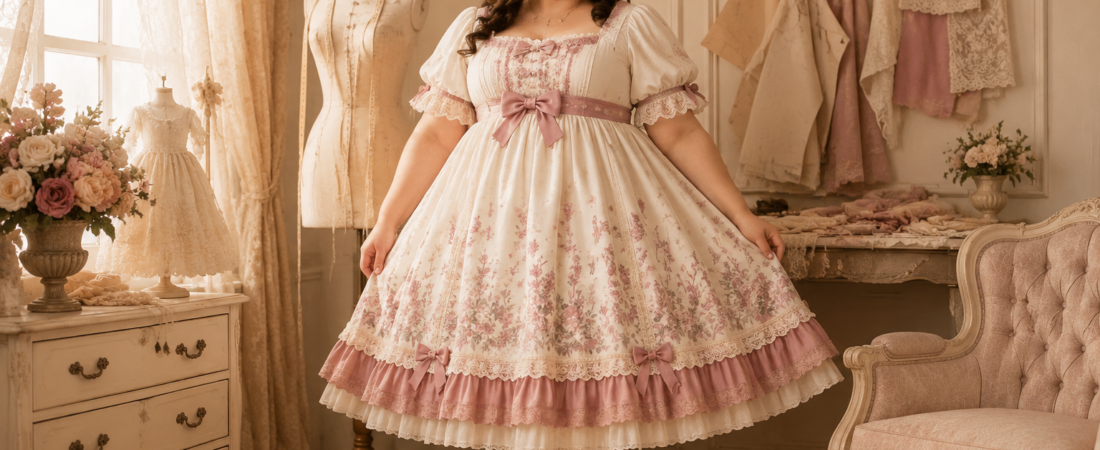
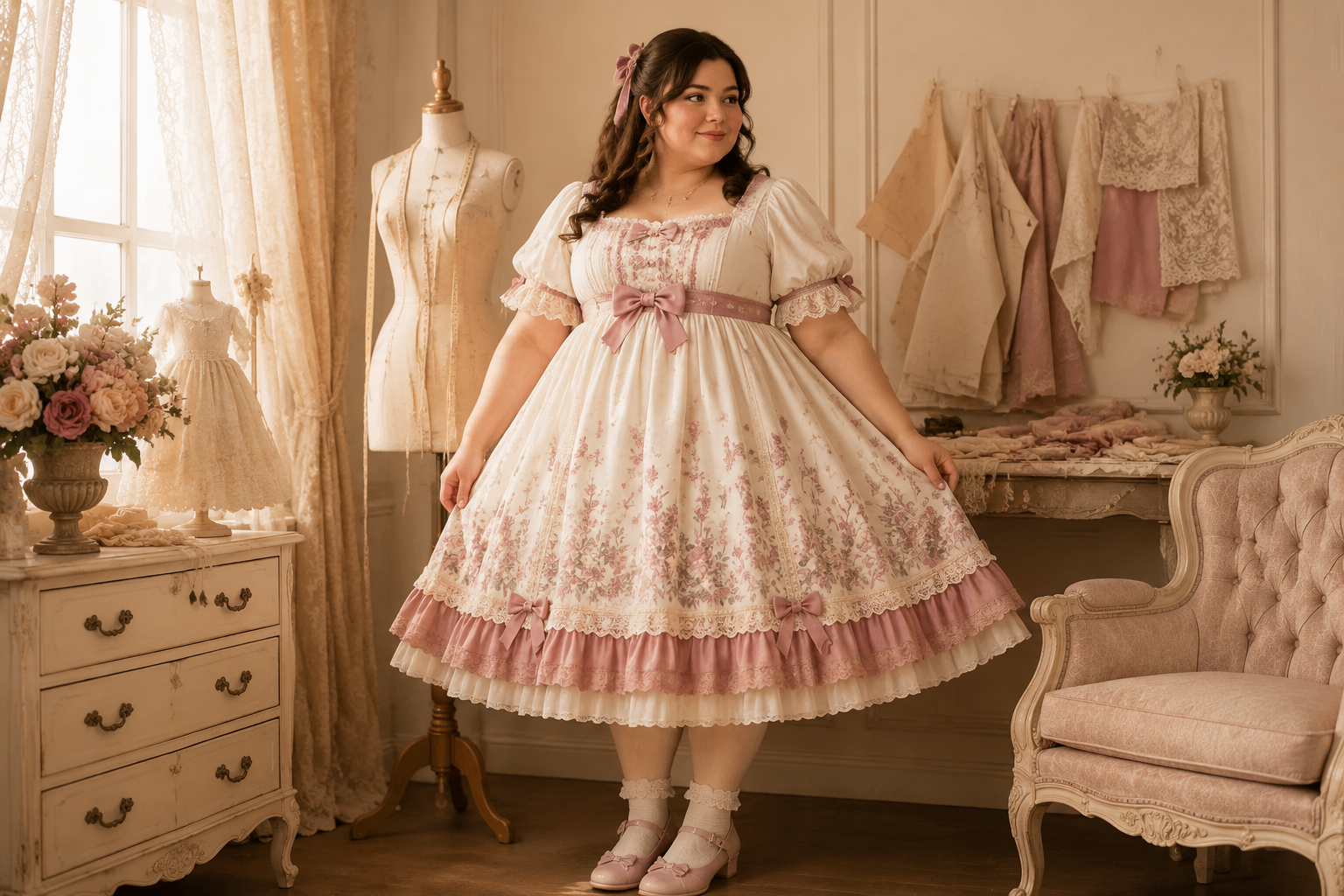
Quick answer: choose a plus-size Lolita waistline by comparing the seam position with your bust, natural waist, height, and planned petticoat layers. Empire, natural-waist, and drop-waist silhouettes can all look balanced on a fuller body; the most flattering option is the one that keeps the bodice stable, gives the bust room, and lets the skirt begin at an intentional point.
Waistline placement is more than a visual detail. It controls where the bodice ends, how the skirt falls over the hips, how trim reads from a distance, and whether sitting or reaching feels easy. Looking at the seam as part of the full garment helps you choose a dress that feels designed for your proportions rather than simply scaled up.
Compare three Lolita waistline placements
| Waistline | Visual effect | Fit priorities | Petticoat and styling notes |
|---|---|---|---|
| Empire-inspired | Raises the skirt start slightly above the natural waist and creates a long, soft vertical line below the bust. | Check bust ease, underbust comfort, shoulder balance, and that the seam stays level rather than lifting toward the back. | Use moderate volume at first; a long skirt, vertical lace, or a narrow sash can keep the silhouette elegant. |
| Natural waist | Defines the waist at its actual position and gives the classic Lolita bodice-to-skirt proportion. | Check the fullest bust, waist ease, waist length, back comfort, and whether the closure sits smoothly without digging in. | Works with many petticoat shapes. Match the skirt volume to the fabric weight and keep the waist trim visually centered. |
| Drop waist | Moves the seam lower toward the high hip and creates a longer bodice with a more elongated, tailored impression. | Check hip ease, sitting clearance, torso length, and whether the lower seam stays comfortable when you bend or sit. | Choose a petticoat with volume that begins below the seam. Vertical panels and structured pleats help avoid a heavy horizontal break. |
How to check proportion on a fuller body
- Find the visual anchor. Look at where the bodice seam, sash, bow, or waist trim will sit in relation to the fullest part of the bust.
- Compare the skirt start with your height. A raised seam usually needs enough skirt length to keep the finished dress from reading too short.
- Review the full side profile. A seam that looks balanced from the front should also leave room for the bust, abdomen, and hips without pulling.
- Plan the actual layers. Blouse thickness, bra style, petticoat drop, and underskirt length all change the finished position by a small but visible amount.
Measurements to send before a fit check
For a made-to-order or custom-fit consultation, send more than a single waist number. The relationship between measurements is what allows a designer to judge the waistline and bodice together.
| Measurement | Why it matters | How to record it |
|---|---|---|
| Bust at fullest point | Shows how much room the bodice needs above the seam. | Stand naturally with the tape level; do not compress the bust. |
| Natural waist | Provides the reference for a natural-waist design and helps compare a raised or lowered seam. | Measure where your torso naturally bends, without pulling the tape tight. |
| Shoulder to waist | Helps assess bodice length, neckline balance, and whether a raised seam will feel too high. | Use the same shoulder or neckline reference point each time. |
| Height and preferred hem | Helps keep the skirt length proportional after changing the waistline location. | Include shoe height and whether you wear a petticoat every time. |
| Hip and sitting clearance | Especially important for drop-waist styles and firm fabrics. | Record the fullest hip and describe the chair or sitting movement you need. |
Movement tests for a real wardrobe
A waistline works when it stays comfortable beyond a standing product photo. Before approving the fit, imagine or test the dress with the same layers you will wear for a tea party, photoshoot, convention, or everyday styling.
- Reach forward: the shoulder and bust should not pull the waist seam upward.
- Turn sideways: the seam should remain level and the skirt should fall without twisting around the body.
- Sit in a chair: the waist should not press into the abdomen, and a drop-waist seam should not cut across the high hip.
- Walk and rotate: the petticoat should support the skirt without pushing the seam into an unintended position.
Choose the silhouette by design intention
The goal is not to hide the body or force every figure into one shape. An empire-inspired waist can emphasize softness and movement. A natural waist can make a structured bodice and lace trim feel precise. A drop waist can create a long, tailored line when the lower torso and hip area have enough ease. What matters is that the seam, skirt volume, and decorative details agree with one another.
When to request a waistline fit check
Use Fit Before You Buy when a dress has an empire seam, fixed natural waist, drop-waist panel, firm corset structure, heavy trim, or a petticoat-specific skirt shape. Include your bust, waist, shoulder-to-waist, height, hip, and preferred layering measurements.
Start with the Size Center for the measurement checklist, then visit the Shop and compare the silhouette, fabric weight, waistline placement, and available fit path on each product page.
Plus-size Lolita waistline placement FAQ
Which Lolita waistline is most forgiving for a fuller bust?
An empire-inspired waistline can feel forgiving when the seam is supported and the bust has enough ease. A natural waist can also be excellent when the bodice is shaped to the wearer. The best choice depends on the complete bust, waist, shoulder, and layering measurements.
How do I measure waistline placement before ordering a Lolita dress?
Measure from the shoulder or neckline reference point to your natural waist while standing normally, then compare that distance with the garment description. Also record bust, waist, shoulder, height, and the petticoat or blouse layers you plan to wear.
Does an empire waist always make a plus-size Lolita dress look shorter?
No. The finished proportion depends on the skirt length, vertical trim, bodice details, and petticoat volume. A softly raised waist with a longer skirt can create an elegant line rather than a shortened one.
Can a drop waist work with a full skirt or petticoat?
Yes, but the skirt support should be balanced with the lower seam. A drop waist usually needs clear vertical structure, enough hip ease, and a petticoat that starts below the seam without creating a hard horizontal break.