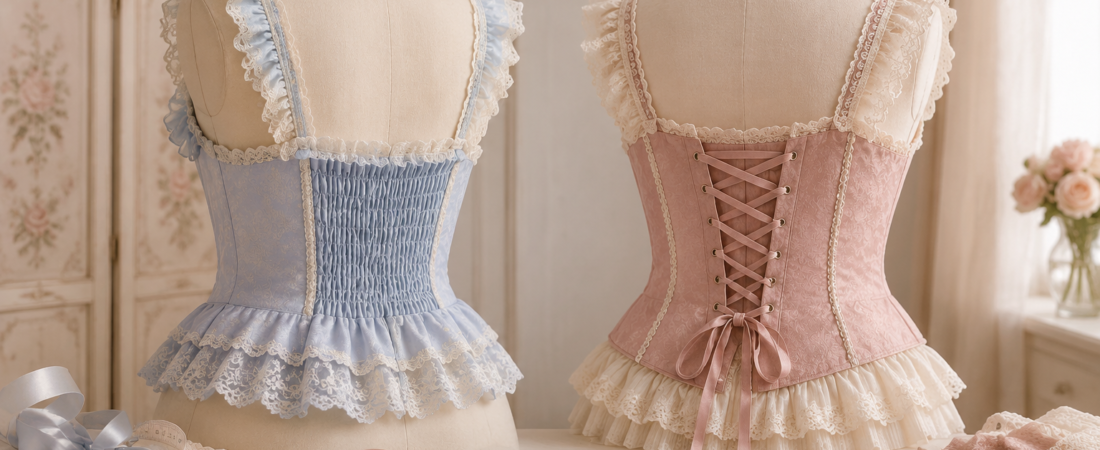
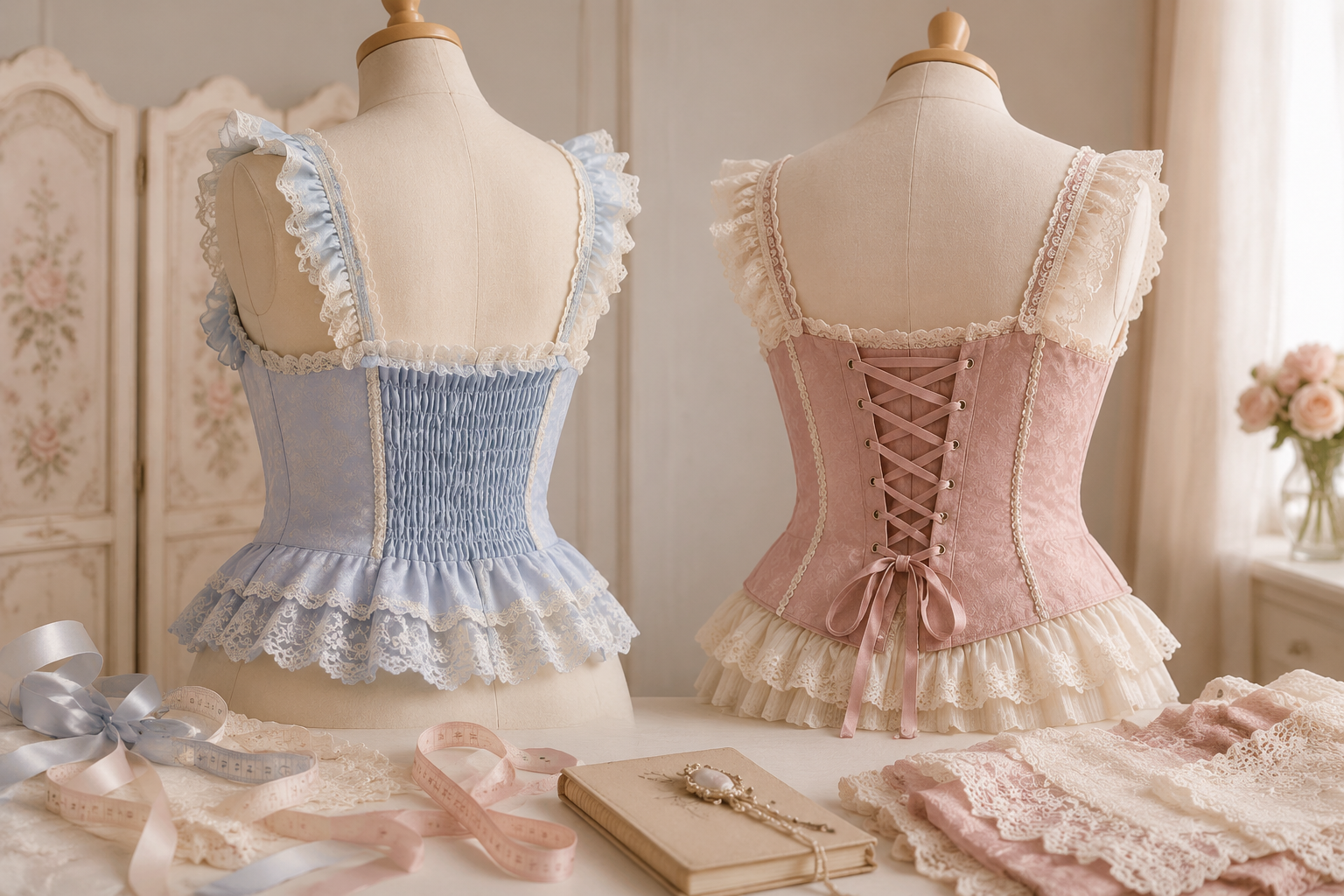
Quick answer: shirring and a fixed waist solve different fit problems. Shirring uses gathered elastic to add flexibility across a defined panel, often the back bodice. A fixed waist keeps a firmer shape and may use lacing, ties, or a zipper for adjustment. For a plus-size Lolita dress, neither construction is automatically better; the decision should follow the exact bust, waist, shoulder, upper-arm, layering, and silhouette requirements of the dress.
Fit Summary
- Shirring: useful when you want targeted flexibility across the elasticized panel.
- Fixed waist: useful when you want stronger structure and a defined bodice line.
- Back lacing: can add adjustment, but the bodice still has a construction limit.
- Layering: a blouse, camisole, or arm coverage changes the fit you need.
- Best path: choose Contact Designer when any key measurement is near the boundary.
What shirring actually changes
Shirring is a series of gathered rows created with elastic thread or elasticized fabric. When the panel expands, it can accommodate some movement in the body without losing the overall dress shape. In Lolita garments, shirring commonly appears across the back bodice, though the location and amount of stretch vary by design.
The important word is some. Shirring does not make the entire dress unlimited. The neckline, shoulder width, sleeve opening, front bodice, zipper, waist seam, and skirt attachment still have their own limits. A shirred back can improve comfort while the front bodice still needs an accurate bust and waist review.
What a fixed waist actually changes
A fixed waist uses a firmer bodice construction to hold a defined waistline. It may include back lacing, an adjustable ribbon, a side zipper, or a modest amount of ease, but it usually gives less overall expansion than a fully elasticized panel.
That structure can be beautiful on a Hime, Classic, or Rococo silhouette because it keeps the waist placement and skirt volume visually clear. It also means the waist, bust, and shoulder relationship should be checked together. Sizing up only for the bust can change the waist position or make the shoulder line too wide.
Shirring vs fixed waist at a glance
| Fit feature | Shirred construction | Fixed-waist construction | What to check before ordering |
|---|---|---|---|
| Flexibility | Offers targeted give across the gathered panel. | Usually relies on the listed ease, lacing, ties, or zipper. | Ask where the stretch is and how much the panel expands. |
| Waist definition | Can feel softer and more forgiving at the back. | Usually holds a crisper waistline and bodice shape. | Compare the finished waist with your preferred silhouette. |
| Layering | May handle a thin blouse more comfortably if the panel has room. | Needs enough ease for the blouse, lining, or underlayer you plan to wear. | Tell the designer what you will wear underneath. |
| Support | Comfortable, but the elastic panel is not the same as a structured corset. | Can provide a firmer line, depending on boning and bodice construction. | Review the front and back construction, not only the word “adjustable.” |
| Best fit path | Useful when measurements move within the product’s intended range. | Useful when your measurements are stable and the silhouette needs structure. | Choose Contact Designer near a size boundary or for mixed measurements. |
When shirring can be a comfortable choice
Shirring can be useful when your bust or waist changes slightly through the day, when you want easier breathing and sitting, or when you prefer a softer back bodice. It can also help when your measurements fall between standard fit paths, provided the shirred panel is placed where you need the flexibility and the rest of the dress still fits.
Look closely at the garment photo and product details. A small shirred insert may provide less room than a full back shirring panel. A decorative panel can look gathered without having much usable stretch. The exact SKU, fabric, elastic rows, lining, and seam placement matter more than the label alone.
When a fixed waist can be the better choice
Choose a fixed waist when the dress depends on a precise waist-to-skirt transition, a strong Rococo or Hime shape, or a bodice that should remain stable during photos and movement. A fixed waist can also feel more supportive when the design has a structured front, back lacing, or carefully placed waist trim.
Comfort still comes first. A structured dress should not pinch, force the neckline upward, restrict breathing, or create a hard line across the waist. If the front looks perfect but the back or shoulders feel tight, the dress needs a fit review rather than a guess.
Designer studio note: “Adjustable” is not a complete measurement. Back lacing can change the circumference within a range, but it cannot move the shoulder seam, widen a fixed sleeve opening, or replace the correct bust and waist proportions.
Four measurements to compare before choosing
- Bust: check the fullest point and consider the ease needed for breathing and sitting.
- Waist: compare the finished waist to where you want the silhouette to sit, not only to a body measurement.
- Shoulders: confirm that the neckline and armhole will not pull when the bodice is fitted.
- Upper arm: review sleeve opening and layering if the dress has puff sleeves or fixed lace cuffs.
How to choose your fit path
Start with the product’s exact colorway and SKU, then compare your measurements with the existing Size Center. Choose US X or US 2X when the garment measurements and your intended layering are comfortably within range. Choose Contact Designer when your bust and waist point to different paths, when the product has a fixed waist, or when shirring appears limited to a small panel.
This approach keeps the shopping decision specific. Two dresses can both say “plus-size Lolita” while using completely different bodice construction. Compare the actual neckline, sleeves, back panel, waist seam, and skirt volume before deciding.
FAQ
What is shirring on a Lolita dress?
Shirring is a gathered panel made with rows of elastic thread or elasticized fabric. It adds flexibility across a specific area, often the back bodice, but it does not replace checking bust, waist, shoulder, and upper-arm measurements.
Is shirring better for plus-size Lolita?
Shirring can be more forgiving when your measurements move within the garment’s intended range, while a fixed waist can give stronger structure and a cleaner silhouette. The better choice depends on the exact dress, support needed, layering, and your measurements.
Does a fixed-waist Lolita dress have any flexibility?
A fixed waist may still offer ease through back lacing, a side zipper, adjustable ties, or a relaxed bodice. Check the product details rather than assuming every fixed-waist dress fits the same way.
When should I use Contact Designer for shirring or fixed waist?
Use Contact Designer when your bust, waist, shoulders, or upper arms sit near the size boundary, when you plan to layer a blouse, or when a fixed waist and structured bodice need a more exact review.
Next step: compare the exact colorway in the Plussize Lolita shop, review the Size Center, and use Fit Before You Buy when the construction or layering needs a closer check.